
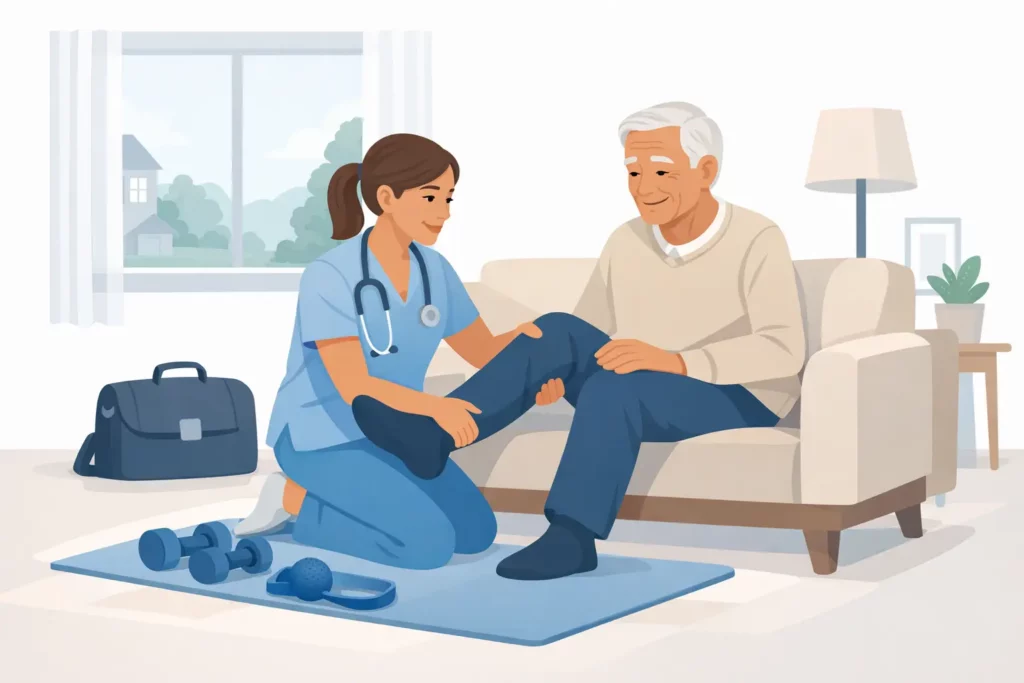
When an older relative starts moving less, the change is rarely just physical. Stairs become a worry, getting out of a chair takes longer, and confidence drops with every near miss or painful step. That is where home visit physiotherapy for elderly patients can make a real difference – not simply by bringing treatment to the door, but by assessing mobility, pain and function in the environment where problems actually happen.
For many older adults, travelling to a clinic is the first barrier to recovery. Pain, fatigue, poor balance, recent surgery or limited transport can all delay treatment. Waiting until things worsen often leads to more stiffness, less activity and a higher risk of falls. A home appointment removes that obstacle and allows treatment to begin earlier, with a clearer view of what is limiting day-to-day life.
Why home visit physiotherapy for elderly patients works well
Clinic treatment has clear benefits, particularly when specialist equipment or imaging is needed. But home-based care can be the best starting point when mobility is reduced, symptoms are flaring, or leaving the house feels too difficult. In those situations, convenience is not the main benefit. Accuracy is.
At home, a physiotherapist can see how someone gets in and out of bed, manages the stairs, turns in the kitchen, or steadies themselves in the bathroom. These details matter. A person may walk reasonably well across a clinic room yet struggle with the narrow hallway, soft sofa or front doorstep they face every day. Treatment is more effective when it is built around those real-world challenges.
There is also a strong psychological advantage. Older adults often feel more relaxed at home, which can make assessment easier and exercise practice more realistic. Families can be present if needed, ask questions, and understand exactly how to support progress between sessions.
Who may benefit most
Home physiotherapy is not only for people who are housebound. It can help a wide range of older adults, especially those recovering from illness, surgery or a sudden drop in mobility. It is often appropriate for joint pain, arthritis, back pain, balance problems, weakness after a hospital stay, reduced walking tolerance, and stiffness linked to inactivity.
It can also be highly valuable after a fall, even if no major injury occurred. Many older people become less active afterwards because they lose trust in their balance. That reduction in movement can quickly lead to weaker muscles, poorer coordination and even greater fall risk. Early physiotherapy helps break that cycle.
There are, however, times when a home visit is only one part of the picture. If symptoms suggest a more complex musculoskeletal problem, advanced diagnostics or interventional pain treatment may also be needed. A specialist clinic with imaging-led assessment can be especially useful where persistent pain, inflammation or unclear symptoms are slowing recovery.
What happens during a home visit
A good home physiotherapy appointment should feel thorough, not rushed. The first session usually begins with a detailed discussion about symptoms, medical history, recent changes in mobility and what the patient wants to get back to doing. That may be walking to the local shops, getting upstairs without assistance, or simply feeling safer when turning in bed.
The physical assessment then looks at movement, strength, joint stiffness, balance and gait. Depending on the problem, the physiotherapist may assess transfers from chair to standing, bed mobility, stair use and walking indoors or outdoors. Pain patterns are important too – not just where it hurts, but when, why and what makes it worse.
From there, treatment is tailored to the individual. That may include hands-on therapy to ease stiffness, guided exercises to improve strength and balance, mobility work for joints, and advice on pacing, footwear, walking aids or simple changes in the home setup. The aim is always practical improvement. Progress should translate into safer movement and better function, not just a better performance during the session itself.
What conditions are commonly treated at home
Many of the issues seen in older adults are musculoskeletal and respond well to targeted physiotherapy. Arthritis is one of the most common. Stiff, painful knees or hips can affect walking, standing and confidence. Treatment often focuses on improving joint movement, reducing pain, strengthening the surrounding muscles and helping the person move more efficiently.
Back pain is another frequent reason for home visits. In older adults, it may be linked to degenerative change, deconditioning, poor posture, compression injuries or long periods of sitting. The right plan depends on the cause. Some patients need careful movement coaching and gradual strengthening, while others need pain relief strategies first so they can start moving again.
Balance and falls prevention are also central. Poor balance is rarely caused by one issue alone. It may involve leg weakness, reduced ankle mobility, slower reactions, medication effects, pain, or fear of falling. A home-based assessment helps identify which factors are most relevant and where the greatest risks lie.
Post-operative rehabilitation can also be delivered at home, particularly after joint replacement or orthopaedic procedures. Early input helps patients regain confidence, restore walking patterns and prevent unnecessary setbacks during the first phase of recovery.
The value of specialist assessment
Not every mobility problem in later life is straightforward. Sometimes pain has been present for months, previous treatment has not helped, or the diagnosis remains uncertain. That is where specialist musculoskeletal expertise becomes especially important.
A service that combines physiotherapy with broader pain and diagnostic support can offer a more complete recovery pathway. If a patient is struggling with severe shoulder pain, advanced knee arthritis or persistent tendon problems, treatment may need more than standard exercise advice. Fast, accurate insight into the source of symptoms can change the plan significantly.
For some patients, home treatment works best as the first phase – restoring basic mobility, reducing immediate pain and building enough function to attend clinic-based assessment if needed. FAB Clinic’s integrated model is designed for exactly that kind of joined-up care, with specialist physiotherapy, imaging-led diagnosis and targeted treatment options available when a problem needs a more decisive approach.
How families can help without taking over
Family support often makes a genuine difference, but it works best when it encourages independence rather than replacing it. The right physiotherapy plan should help an older person do more for themselves, safely and gradually. If relatives step in too quickly, it can unintentionally reduce confidence and slow recovery.
A better approach is to support the routine. That might mean helping to clear a safe walking space, reminding the patient to complete their exercises, or noting when pain or mobility changes. It also helps to attend part of the appointment if the patient wishes, especially when advice on transfers, stairs or falls prevention needs to be understood by everyone involved.
Clear communication matters. If an older adult says they are frightened of falling, exhausted after walking a few metres, or avoiding certain movements, those details should be shared. They often reveal more than a simple pain score.
Choosing the right provider for home visit physiotherapy for elderly patients
The standard to look for is not just convenience. It is clinical depth. Older adults often have overlapping issues – joint pain, weakness, previous injuries, balance concerns and other health conditions all affecting one another. That calls for a physiotherapist who can assess the wider picture and create a plan that is safe, realistic and focused on measurable improvement.
It is worth asking whether the provider has strong experience in musculoskeletal care, rehabilitation and falls-related mobility issues. Practical treatment matters, but so does knowing when symptoms need further investigation or a different treatment pathway. The best care is not one-size-fits-all. It adapts to the patient’s home environment, health status and goals.
A good provider should also set expectations clearly. Progress may be quick in some cases, such as post-hospital deconditioning or a mild flare of arthritis. In more persistent conditions, recovery can be slower and may need a combination of symptom control, strengthening and long-term management. Honest guidance builds trust and leads to better outcomes.
The main thing older adults need is not pressure to do more than they can. They need the right support, at the right pace, with a plan grounded in specialist judgement. When treatment happens where daily life actually takes place, even small gains can have a meaningful impact – more confidence getting to the bathroom at night, steadier walking to the front door, and a safer, more comfortable return to everyday movement.