
Need any help? Call us at 0203 904 2888!
Ultrasound Diagnostics
Diagnostic Ultrasound is a safe, painless imaging technique that uses high-frequency sound waves to show real-time images of muscles, tendons, ligaments and soft tissues. It helps physiotherapists accurately identify injuries, monitor healing and create more effective treatment plans.

NEED AN APPOINTMENT?
Call us: 0203 904 2888
WhatsApp us: +442039042888
Email us: info@fab-clinic.co.ukA specialist clinic providing diagnostic ultrasound scans & ultrasound-guided injections to different joints, tendons and ligaments in London

Ultrasound Diagnostics as a physio assessment
A non-invasive imaging method used to assess soft tissue injuries, guide diagnosis and support targeted physiotherapy treatment.
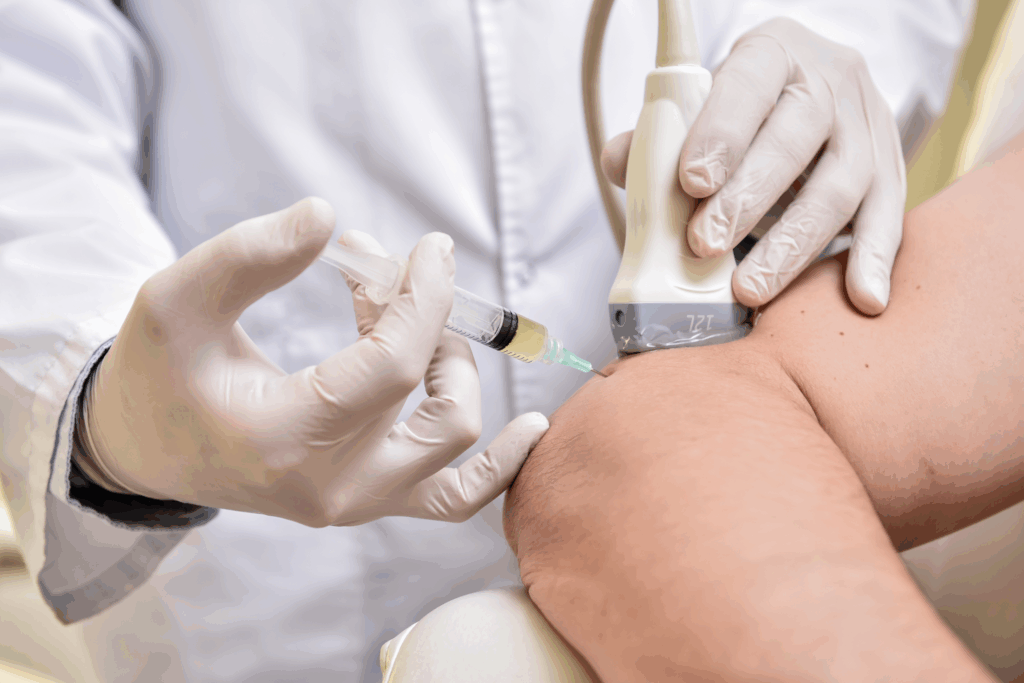
Ultrasound guided Injections(Steroids)
Ultrasound-guided injections use real-time imaging to accurately deliver medication to the exact source of pain or inflammation, improving effectiveness, safety and patient comfort.
Below are a list of most common conditions where a cortisone/steroid injection can effectively supress inflammation & support a full joint range of movement (ROM):
- Shoulder
- Subacromial bursitis / Subacromial impingement syndrome
- Acromioclavicular joint pain / capsulitis / arthritis
- Calcifying tendinitis / tendinopathy (we recommend to trial ESWT prior to steroid injections)
- Frozen Shoulder / Adhesive Capsulitis (Option of Hydro dilatation could be considered after (clinical examination)
- Shoulder Glennohumeral Arthritis
- Elbow
- Tennis Elbow
- Golfers Elbow
- Olecranon bursitis
- Radiocapitellar joint pain / capsulitis / arthritis
- Distal bicipital tendinitis radial head bursitis
- Wrist
- Carpal Tunnel Syndrome
- Wrist Osteoarthritis
- Dequervain’s tenosynovitis
- Trigger finger
- Carpo-Metacarpal Joint Arthritis / pain (CMC Joint)
- Metacarpophalangeal joint Arthritis ( MCP Joint)
- Distal Radio-Ulnar Joint pain
- TFCC pain /dysfunction
- Hip
- Hip Joint Osteoarthritis
- Psoas Bursitis
- Trochanteric Bursitis
- Ischial Tuberosity Bursitis
- Gluteal Tendinopathy
- Knee
- Knee Joint Osteoarthritis
- Suprapatellar burisits
- Infrapatellar bursitis
- Patellofemoral joint pain / arthritis / dysfunction
- Pes anserine bursitis
- Baker’s cyst aspiration
- Ankle and Foot
- Ankle joint arthritis (Talocrural / Subtalar joints)
- Sinus Tarsi Syndrome
- Tarsal Tunnel Syndrome
- Plantar Fasciitis (We recommend ESWT treatments prior to having steroid injections wherever applicable)
- Retrocalcaneal Bursitis
- Achilles Tendinopathy (We recommend ESWT treatments and a specialist opinion with an Ankle and foot surgeon if it doesn’t help and we do not recommend steroid injection to Achilles tendon owing to risk of rupture)
- Metatarsalgia
- 1st MTP joint (Great toe) Arthritis / pain
- Morton’s Neuroma
- Mid tarsal arthritis / capsulitis
- Ankle Impingement
Although this is not an exhaustive list, we always recommend getting in touch or come in for a physical examination to ensure your MSK injury/condition is due to inflammation – we can establish this best by an ultrasound scan which is carried out by one of our experienced MSK sonographers.
HOW TO BOOK?
Call us: 0203 904 2888
WhatsApp us: +442039042888
Email us: info@fab-clinic.co.uk
FAB clinic is a specialist centre that provides diagnostic ultrasound and therapeutic ultrasound-guided procedures to assess and treat different musculoskeletal problems that can affect the joints, tendons, ligaments & muscles.
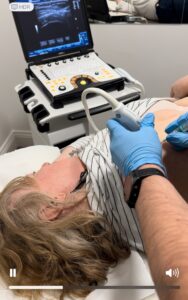
Ultrasound is high frequency sound waves produced by a special machine. They can penetrate the skin providing very useful images of the deep tissues within the body. Cortisone is an anti-inflammatory medicine that can help relieve pain and inflammation. It can be injected into a joint to help relieve pain, usually in the context of arthritis. This is referred to as “an intra articular cortisone injection”. Ultrasound-guided steroid injection is also used to treat other inflammatory conditions like bursitis (inflammation of sac-like fluid collections present in different parts of the body) and tendonitis (tendon inflammation). There is significant evidence that ultrasound guided steroid joint injections provide better levels of pain relief and longer effects compared with injections done without imaging guidance.
What Is Diagnostic Ultrasound?
Diagnostic Ultrasound is a non-invasive imaging technique that uses high-frequency sound waves to create real-time images of muscles, tendons, ligaments, joints and soft tissues.
Physiotherapists use it to accurately assess injuries, monitor healing progress and guide treatment plans.
It is safe, painless and does not use radiation, making it suitable for a wide range of patients.
Why Physiotherapists Use Ultrasound Imaging
-
-
Helps identify the exact cause of pain or dysfunction
-
Provides real-time visualisation of soft tissue structures
-
Detects injuries that may not be visible through physical examination alone
-
Allows therapists to measure changes over time
-
Helps confirm or rule out suspected diagnoses
-
Improves accuracy in treatment planning and rehabilitation
-
What Ultrasound Can Assess (Common Conditions)
Soft Tissue Injuries
Muscle tears or strains
Tendon injuries (including partial tears)
Ligament sprains
Fascial injuries
Bursitis
Shoulder Conditions
Rotator cuff tears
Biceps tendon pathology
Shoulder impingement
Subacromial bursitis
Elbow & Wrist
Tennis elbow
Golfer’s elbow
Tendon inflammation
Carpal injuries / wrist tendinopathies
Hip & Knee
Hip flexor strains
Iliopsoas bursitis
ITB friction
Patellar tendinopathy
Quadriceps or hamstring tears
Foot & Ankle
Achilles tendinopathy
Plantar fasciitis
Ankle ligament sprains
Peroneal tendon injuries
Other Assessments
Inflammation
Swelling / effusion
Scar tissue
Soft tissue masses (non-cancerous)
Muscle activation during movement (biofeedback)
Benefits of Ultrasound in Physiotherapy
Immediate results, no waiting for reports
Safe, painless, and radiation-free
Helps detect injuries earlier
Allows for more accurate and personalised treatment
Visual feedback helps patients understand their injury
Can track healing progress over time
Useful for guiding interventions such as taping, dry needling and exercise selection
What to Expect During an Ultrasound Assessment
-
-
Your physiotherapist will begin with a full consultation and physical assessment
-
A gel is applied to the skin over the area being assessed
-
A small handheld probe (transducer) is moved across the skin
-
You may be asked to move the limb or contract a muscle so we can see how the tissues behave in real-time
-
The process is painless and comfortable
-
Images will be reviewed with you immediately
-
Your therapist will discuss the findings and outline a treatment plan
-
What Ultrasound Cannot Assess
-
-
Cannot see inside bones
-
Cannot diagnose fractures
-
Cannot detect cancers or internal organ conditions
-
Does not replace X-rays, MRI, or CT scans when those are required
-
Who Is a Good Candidate for Ultrasound Assessment?
Suitable for patients with:
Sudden or acute injuries
Persistent pain lasting more than 2–3 weeks
Suspected muscle or tendon tears
Recurring or chronic pain
Sports injuries
Unclear diagnosis after physical testing
Slow or delayed healing
Not recommended if:
There is a suspected fracture (refer for X-ray)
Internal organ issues are suspected
The injury requires specialist imaging (MRI/CT
Frequently Asked Questions (FAQ)
Is diagnostic ultrasound safe?
Yes — it uses high-frequency sound waves and contains no radiation.
Do I need a referral?
No. Physiotherapists trained in diagnostic ultrasound can assess you directly.
How long does an assessment take?
Usually 20–40 minutes, depending on the area being assessed.
Will it confirm my diagnosis?
It can confirm or rule out many soft tissue injuries, but further imaging may be recommended if needed.
Can I start treatment immediately?
Yes. We will discuss your results and begin treatment during the same appointment if appropriate.

What Are Ultrasound-Guided Injections?
Ultrasound-guided injections use real-time imaging to precisely deliver medication into targeted tissues such as joints, tendons, bursae or soft tissue structures.
The ultrasound ensures high accuracy, improved outcomes and reduced discomfort compared to “blind” (non-guided) injections.
These injections are commonly used to reduce pain, calm inflammation and assist recovery from musculoskeletal injuries.
Why Use Ultrasound Guidance?
-
-
Ensures accurate needle placement
-
Avoids nerves, blood vessels, and sensitive structures
-
Allows for targeted delivery to the exact site of injury
-
Improves treatment effectiveness and predictability
-
Allows visualization of inflammation, swelling, or tears
-
Reduces pain during the injection
-
Helpful for complex injuries or deep structures
-
Types of Injections Commonly Performed
Corticosteroid (Steroid) Injections
Used to reduce inflammation and provide pain relief for conditions like bursitis, arthritis, frozen shoulder and tendon irritation.
Hyaluronic Acid (Viscosupplement) Injections
Used particularly for knee osteoarthritis to improve lubrication and reduce joint pain.
Local Anaesthetic Injections
Used for diagnostic purposes or short-term pain relief.
Dry Needle Aspiration
Used to drain cysts, fluid pockets or calcific deposits with guidance.
Prolotherapy / Regenerative Injections
Uses solutions that stimulate tissue repair.
Conditions Ultrasound-Guided Injections Help Treat
-
Shoulder
-
Frozen shoulder (adhesive capsulitis)
-
Rotator cuff tendinopathy
-
Subacromial bursitis
-
AC joint arthritis
Elbow & Wrist
-
Tennis elbow
-
Golfer’s elbow
-
De Quervain’s tenosynovitis
Hip & Knee
-
Hip bursitis
-
Trochanteric pain syndrome
-
Knee osteoarthritis
-
Patellar tendinopathy
Foot & Ankle
-
Plantar fasciitis
-
Achilles tendinopathy
-
Ankle joint arthritis
Soft Tissue / General
-
Muscle tears (for pain/inflammation control)
-
Scar tissue and chronic inflammation
-
Bursitis in multiple areas
-
Benefits of Ultrasound-Guided Injections
-
-
Higher accuracy than traditional methods
-
Reduces inflammation quickly
-
Improves mobility and function
-
Supports physiotherapy and rehabilitation
-
Often provides rapid pain relief
-
Minimally invasive with minimal downtime
-
Safe and widely used
-
Allows ongoing monitoring with ultrasound
-
What to Expect During the Procedure
-
-
A consultation and physical assessment are performed first
-
Ultrasound gel is applied to the skin
-
The clinician uses real-time imaging to guide the needle
-
A small amount of medication is injected into the target area
-
Most people feel minimal discomfort
-
The entire procedure usually takes 10–20 minutes
-
You can typically continue normal activities afterward
-
You may be monitored briefly after the injection
-
Aftercare Instructions
-
-
Mild soreness or swelling can occur for 24–48 hours
-
Avoid strenuous activity on the treated area for a day
-
Apply ice if needed
-
Follow any physiotherapy exercises provided
-
Pain relief may be immediate (anaesthetic) or gradual (steroid/hyaluronic acid)
-
Improvement usually occurs over several days to 2 weeks
-
Risks and Safety Information
-
-
Mild discomfort or bruising
-
Temporary increase in pain
-
Rare risk of infection
-
Allergic reaction is uncommon
-
Very low risk of bleeding
-
Ultrasound guidance significantly reduces complications
-
Who Is a Good Candidate for Ultrasound-Guided Injections?
-
-
Suitable for:
-
Persistent or chronic pain
-
Bursitis or inflamed tissues
-
Arthritic joints
-
Tendon irritation unresponsive to physiotherapy
-
Recurring injuries
-
Pain limiting daily function
May not be suitable if:
-
Infection is present
-
You are taking certain blood thinners
-
You have uncontrolled diabetes
-
You are pregnant (depending on medication)
-
A different imaging modality is required
-
-
Frequently Asked Questions (FAQ)
-
-
Does the injection hurt?
Most people feel only mild pressure. Ultrasound guidance makes it more comfortable and accurate.
How long until I feel results?
Some relief may occur immediately from anaesthetic; full benefits often appear within several days to 2 weeks.
Do I still need physiotherapy afterward?
Yes — injections help reduce pain, but physiotherapy restores movement, strength, and long-term function.
Are the injections safe?
Yes. They are commonly used worldwide and ultrasound improves safety significantly.
How many injections will I need?
Many patients only need one; others may benefit from a short series depending on their condition.
-