 Skip to content

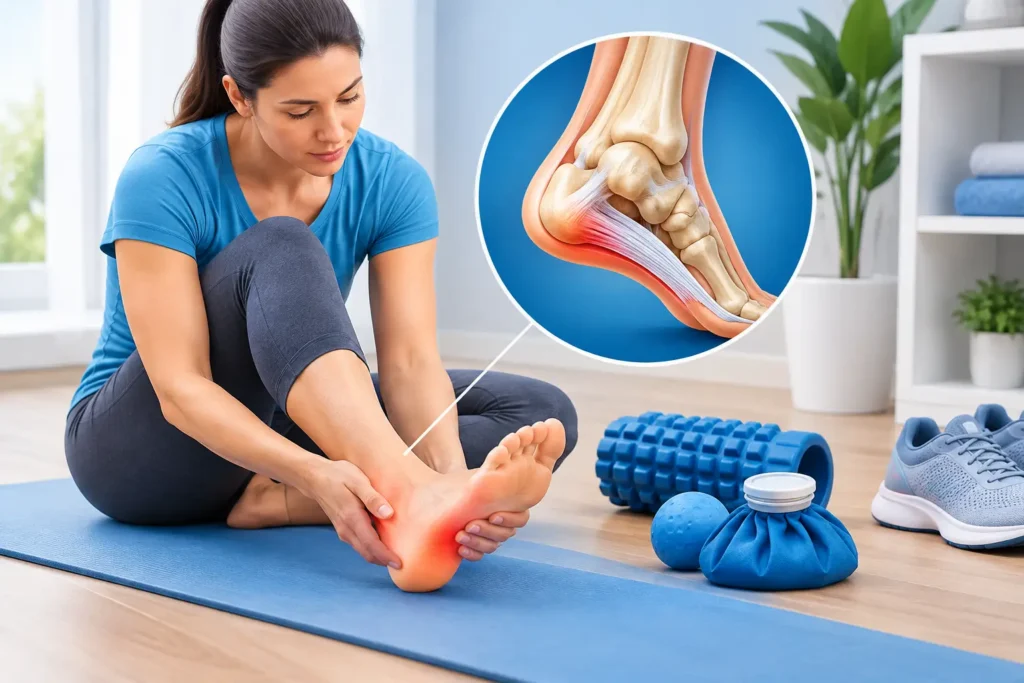
That sharp first step out of bed can make a short walk to the kitchen feel like a major challenge. To relieve plantar fascia pain effectively, the goal is not simply to stretch the foot until it feels better. It is to reduce irritation, restore the foot and calf’s capacity to absorb load, and identify the reasons your heel is being overloaded in the first place.
Plantar fascia pain is often called plantar fasciitis, although persistent cases are not always driven by inflammation alone. The plantar fascia is a strong band of tissue running from the heel into the toes. It helps support the arch and transfer force as you walk, run or stand. When it becomes irritated or unable to tolerate repeated loading, pain commonly develops underneath the heel, particularly after rest or during the first few minutes of activity.
Why plantar fascia pain can linger
Many people carry on with their usual routine, hoping the pain will settle. A few days of reduced activity may ease symptoms, but pain often returns when walking distances, gym sessions or long days on your feet resume. This pattern is a sign that the tissue’s current capacity does not yet match the demands placed on it.
A sudden increase in running, a new exercise routine, prolonged standing at work or a change in footwear can all contribute. Calf tightness and weakness through the foot, ankle, hips or legs may also alter how force travels through the heel. Body weight, reduced ankle movement, poor recovery and hard surfaces can add to the problem.
There is rarely one single cause. That is why a generic stretch plan may bring only short-lived relief. The best treatment plan should reflect your symptoms, activity level, footwear, work demands and the way you move.
Relieve plantar fascia pain in the early stage
When every step is painful, temporarily reducing aggravating activity is sensible. This does not mean complete rest unless advised by a clinician. Keeping the foot moving within a tolerable range usually supports recovery better than avoiding all activity for weeks.
For the first one to two weeks of a flare-up, reduce the activities that repeatedly trigger sharp heel pain. This may mean shortening walks, taking a break from running and jumping, or splitting standing tasks into manageable periods. If running is important to you, low-impact alternatives such as cycling or swimming may help you maintain fitness while the heel settles.
Cold can provide short-term comfort after a busy day. Rolling the sole of the foot gently over a chilled bottle can feel soothing, but avoid aggressive pressure directly into a very sore heel. Simple pain relief may also be appropriate for some people, but it should be discussed with a pharmacist, GP or treating clinician, particularly if you have other health conditions or take regular medication.
Morning pain deserves particular attention. Before you stand, gently move the ankle up and down and pull the toes back towards the shin for 20 to 30 seconds. This prepares the fascia for the first few steps rather than asking a stiff, sensitive tissue to take your full body weight immediately.
Build capacity, not just flexibility
Stretching the calf and plantar fascia can be useful, especially if the ankle feels stiff. However, stretching alone rarely provides a complete answer for ongoing heel pain. Progressive strengthening helps the foot and calf tolerate everyday loading with greater confidence.
Start with exercises that are controlled and do not produce a sharp or escalating pain response. Mild discomfort can be acceptable, but symptoms should settle reasonably quickly and should not be substantially worse the following morning.
Start with the calf and foot
A practical starting point is a seated calf raise. With both feet on the floor, lift the heels slowly, pause, then lower with control. Progress to standing calf raises as this becomes comfortable. Calf strength matters because the calf and Achilles tendon help manage the forces that would otherwise place more strain through the heel and plantar fascia.
For the foot itself, try a short-foot exercise. While seated or standing, gently draw the ball of the foot towards the heel to raise the arch slightly, without curling the toes. The movement is subtle. The aim is to activate the small muscles that support the arch, not to grip the floor.
As symptoms improve, a clinician may progress you to single-leg calf raises, loaded exercises and a gradual return to impact. The right level depends on your starting point. An active runner and someone whose pain developed after a long period of reduced mobility will need different rehabilitation progressions.
Use a simple pain guide
A useful rule is to judge not only pain during exercise, but also your response over the next 24 hours. If discomfort is mild and settles by the next day, the load is often appropriate. If you are limping afterwards, waking with much worse pain or needing several days to recover, reduce the volume, intensity or frequency.
Recovery is usually measured in weeks rather than days. Consistency with a manageable programme is more valuable than one intense session followed by a painful setback.
Check footwear and daily loading
Supportive footwear can make a noticeable difference while the heel is sensitive. Choose shoes with a stable sole, comfortable cushioning and enough room around the toes. Very flat, worn-out shoes and unsupportive slippers can aggravate symptoms for some people, particularly on hard floors.
This does not mean that everyone needs the same shoe, orthotic or heel insert. Insoles can reduce strain and improve comfort for certain patients, but they work best when used alongside progressive rehabilitation rather than as the only treatment. A temporary heel cup or orthotic may be particularly useful if you must spend long periods standing at work.
Think carefully about total daily load as well. Ten thousand steps, a commute, a gym class and an evening dog walk may each feel reasonable in isolation, but together they can exceed what the heel currently tolerates. Adjusting one or two demands can create enough room for recovery without putting life on hold.
When to seek specialist assessment
Heel pain is not always plantar fascia pain. Achilles tendon problems, heel fat-pad irritation, stress injuries, nerve-related pain and inflammatory conditions can create similar symptoms. Pain that is mainly at the back of the heel, burning or tingling sensations, marked swelling, or pain that persists at rest all deserve a proper assessment.
Seek prompt medical advice if you cannot bear weight, have severe swelling or redness, develop a fever, experience numbness, or have pain following a significant injury. People with diabetes, circulation problems or reduced sensation in the feet should also avoid self-managing new foot pain without clinical guidance.
If symptoms have not improved after several weeks of sensible load management and rehabilitation, an expert assessment can provide fast, accurate insight. At FAB Clinic, specialist musculoskeletal assessment can examine the foot, ankle and the wider movement pattern, while diagnostic ultrasound may help clarify whether the plantar fascia is thickened or whether another structure is contributing to pain.
Treatment options when basic care is not enough
Persistent plantar fascia pain should not be dismissed as something you simply have to live with. Hands-on physiotherapy may help address joint stiffness and soft-tissue restriction, while a structured rehabilitation plan targets the underlying load issue. Taping, temporary orthotic support and advice on a return to sport can be useful additions for the right patient.
Extracorporeal shockwave therapy may be considered for stubborn cases that have not responded to a well-delivered programme of conservative treatment. It is not an instant fix, and it is not right for every heel problem, but it can be a valuable option when used following a clear diagnosis and alongside rehabilitation.
In selected circumstances, ultrasound-guided interventions may also be discussed. These decisions require care. An injection can have a role in specific cases, but it should never replace a plan to rebuild strength, improve load tolerance and address the factors that allowed symptoms to persist.
The most encouraging sign is not merely one pain-free morning. It is being able to walk, work, train and enjoy daily life with a heel that remains settled afterwards. Give the tissue a clear plan, progress it patiently and seek specialist help when the pattern is not improving – that is how lasting recovery becomes far more achievable.
