 Skip to content
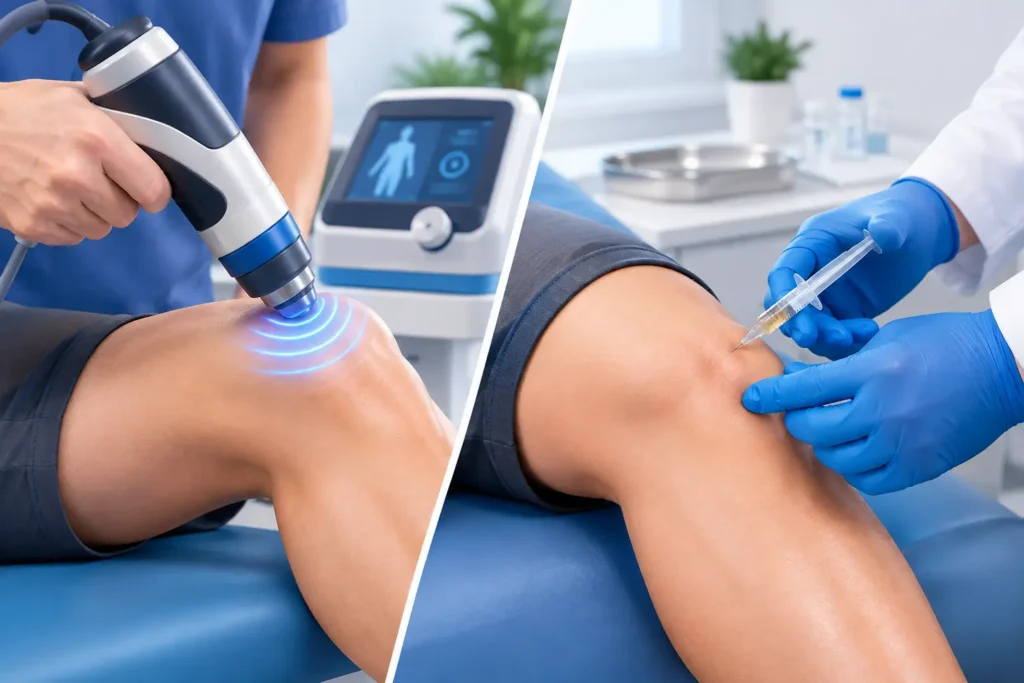
A painful heel on the first few steps of the morning, a shoulder that catches when reaching overhead, or an elbow that has stopped tolerating a tennis racquet can all prompt the same question: should you have shockwave therapy versus steroid injections? The answer is not simply a choice between two treatments. They work in different ways, suit different tissue problems and have different roles in a well-planned recovery.
For the right diagnosis, either treatment can be valuable. The priority is to establish what is causing the pain, how long it has been present and whether the main issue is tendon change, inflammation inside a joint or bursa, arthritis, or another source entirely. That is where specialist assessment and, where appropriate, diagnostic ultrasound provide fast, accurate insight.
Shockwave Therapy Versus Steroid Injections: The Core Difference
Extracorporeal shockwave therapy uses high-energy acoustic waves directed at the painful area. It is most often used for persistent tendon-related conditions, such as plantar fasciitis, Achilles tendinopathy, tennis elbow, calcific shoulder tendinopathy and some gluteal tendon problems. The treatment is intended to stimulate a biological healing response in tissue that has become slow to recover.
A steroid injection delivers corticosteroid medication to reduce inflammation and pain. It may be placed into a joint, bursa, tendon sheath or around another inflamed structure. Ultrasound guidance can help the clinician identify the relevant tissue and position the needle accurately, particularly in smaller or deeper areas.
Put simply, shockwave therapy is generally a rehabilitation-led option for chronic tendon pain. A steroid injection is more often used to settle an inflammatory flare and create a window in which movement and rehabilitation become more manageable. Neither should be viewed as a standalone cure.
When Shockwave Therapy May Be the Better Fit
Tendons do not always behave like inflamed tissue. In longstanding tendinopathy, the tendon structure may have altered and become less able to tolerate load. This is why repeated rest, anti-inflammatory medication or injections do not always solve the problem.
Shockwave therapy is commonly considered when symptoms have lasted for several months, the diagnosis points towards tendinopathy, and a programme of progressive strengthening is needed. It can be particularly useful for people whose pain has restricted walking, training, work duties or everyday activities despite sensible initial care.
Treatment normally involves a course of sessions rather than a single appointment. Discomfort during treatment is common, and the area can feel sore for a day or two afterwards. Improvements are often gradual rather than immediate, developing over weeks as the treatment is paired with the right loading and mobility plan.
Shockwave is not suitable for every patient. Recent injury, certain circulation or nerve conditions, pregnancy in the treatment area, blood-clotting concerns and particular medications may affect whether it is appropriate. A clinician should also rule out causes of pain that require a different approach, such as a stress fracture or significant tendon tear.
The benefit of taking a longer-term view
The main advantage of shockwave therapy is that it aims to support recovery while preserving the focus on tendon capacity. It does not remove the need for rehabilitation. In fact, the best outcomes usually depend on gradually rebuilding strength in the calf, shoulder, hip or forearm, depending on the affected area.
For an active person with plantar fasciitis, that may mean managing running volume while improving calf and foot strength. For someone with shoulder pain, it may mean restoring comfortable movement before progressing to more demanding overhead exercise. The programme should fit the person, not just the scan finding.
When a Steroid Injection May Be More Appropriate
Steroid injections can provide meaningful short-term pain relief when inflammation is driving symptoms. Examples include an arthritic joint flare, subacromial bursitis around the shoulder, trigger finger, carpal tunnel symptoms in selected cases, or a painful bursa around the hip or knee.
Reducing pain can be clinically useful. When someone cannot sleep, dress comfortably, walk properly or begin physiotherapy because of severe pain, an injection may calm symptoms enough to allow rehabilitation to start. This is often the most important benefit: not simply less pain, but a better opportunity to restore movement and function.
The response varies. Some people experience substantial relief, while others have a partial or short-lived benefit. The duration depends on the condition, the severity of tissue change, activity demands and whether the underlying cause is addressed after the injection.
Why location and diagnosis matter
A steroid injection is not automatically the best response to pain near a tendon. Steroid placed into or too close to certain tendons can weaken tissue and may increase rupture risk. For that reason, clinicians are cautious around areas such as the Achilles tendon and use steroid only when the likely source of pain and the injection target have been carefully assessed.
There are also wider considerations. Steroid injections can temporarily raise blood glucose levels in people with diabetes, and a short-term post-injection flare can occur. Infection is uncommon but serious, which is why appropriate sterile technique and clear aftercare matter. Repeated injections into the same area are usually limited because of potential effects on soft tissue, cartilage or skin.
Pain Relief Now or Tissue Recovery Over Time?
This is often the practical decision point. If pain is caused by a highly inflamed joint or bursa, a well-targeted steroid injection may offer the quickest route to comfort and improved mobility. If the issue is a longstanding tendon that has lost its ability to cope with load, shockwave therapy combined with progressive rehabilitation may be more aligned with the problem.
There are occasions when both treatments are considered at different stages, but this is not a default pathway. For example, a clinician may first address a clear inflammatory component so that a patient can move more freely, then focus on rehabilitation. Equally, they may decide that injection is unlikely to help a degenerative tendon problem and recommend shockwave and strengthening instead.
The temptation to choose solely on speed is understandable, especially when pain is disrupting work or sport. Yet the fastest reduction in symptoms is not always the treatment most likely to improve long-term resilience. A good plan balances immediate relief with what the tissue needs next.
How We Build the Right Treatment Plan
At FAB Clinic, assessment begins with the story behind the pain: how it started, what aggravates it, what has already been tried and what the patient needs to return to. A physical examination helps assess movement, strength and tissue sensitivity. Diagnostic ultrasound may be used where it will change clinical decision-making, offering a clearer view of tendons, bursae, joints and surrounding soft tissues.
From there, the plan may include shockwave therapy, an ultrasound-guided injection, hands-on treatment, physiotherapy, acupuncture or dry needling, and a structured rehabilitation programme. The aim is not to add treatments for their own sake. It is to select the most effective route towards pain relief, restored mobility and confident return to activity.
Questions Worth Asking Before You Decide
Ask what tissue is believed to be causing the pain and how certain the diagnosis is. Ask whether your condition appears inflammatory, tendon-related or both, and what improvement is realistic over the next few weeks and months. It is also sensible to ask how treatment will be combined with rehabilitation, what side effects to expect and when to seek advice after treatment.
If you have diabetes, take anticoagulant medication, are pregnant, have a history of tendon rupture, or are managing a significant medical condition, make sure this is discussed before proceeding. These details help the clinician protect your safety and choose an appropriate option.
The most useful treatment is the one that matches the diagnosis, your health and your goals. Whether that is shockwave therapy, a carefully targeted steroid injection or a different route altogether, the next step should leave you with a clear plan to move with less pain and more confidence.
