
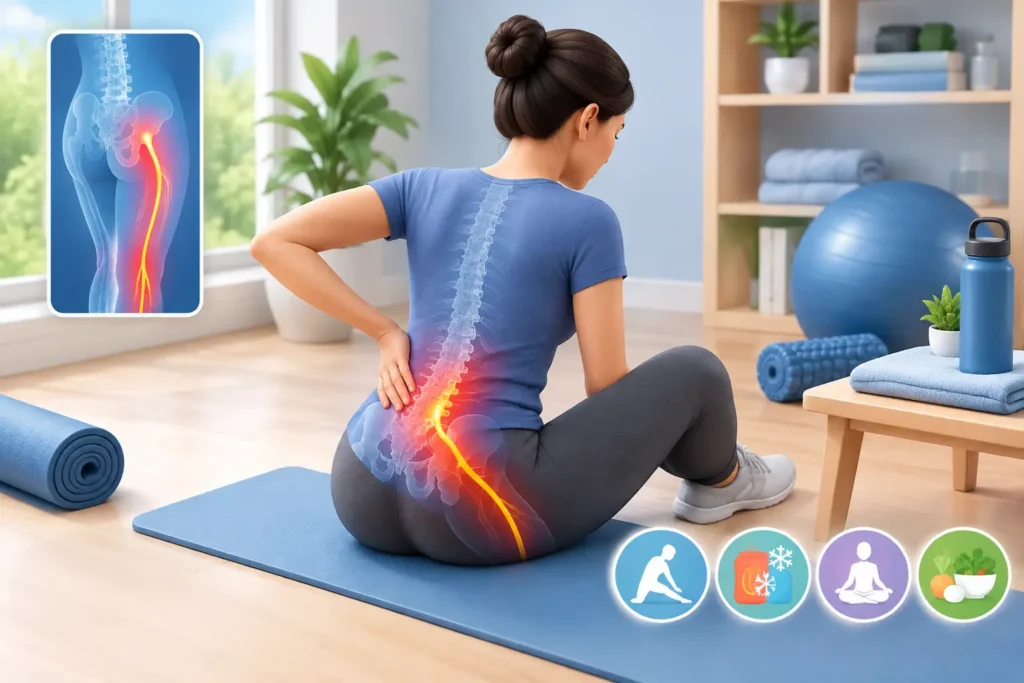
A sciatica flare-up can turn an ordinary morning – getting out of bed, sitting through a meeting or putting on shoes – into a sharp reminder that your back and leg are not happy. Knowing how to manage sciatica flare-ups means reducing irritation without becoming completely inactive, while recognising when symptoms need prompt specialist assessment.
Sciatica describes pain caused by irritation or compression of the sciatic nerve or the nerve roots that form it. It commonly travels from the lower back or buttock into one leg and may feel burning, electric, aching, tingling or numb. The best treatment plan depends on what is driving the symptoms. A disc problem, spinal joint irritation, narrowing around a nerve, hip dysfunction and muscular pain can all create similar patterns, which is why a precise assessment matters when pain is severe, persistent or recurrent.
What to do in the first 24 to 48 hours
The goal during an acute flare-up is not to force the pain away with aggressive stretching or to stay in bed. It is to find tolerable positions, settle the nervous system and keep the body moving in small, controlled amounts.
Start by changing position regularly. Long periods of sitting, especially slumped on a sofa or at a desk, can aggravate some types of sciatica. Try standing or walking gently for a few minutes every half hour, then reassess. If walking clearly increases pain further down the leg, reduce the distance and frequency rather than pushing through it.
Many people find short rests helpful, particularly lying on their back with a pillow under the knees, or on their side with a pillow between the knees. These positions can reduce strain through the lower back and pelvis. However, bed rest beyond a brief period usually makes stiffness, sensitivity and confidence worse.
A heat pack may ease muscle guarding and stiffness, while a cold pack can feel more comfortable if the area is freshly irritated or inflamed. Use either for around 15 to 20 minutes with a layer between the pack and your skin. There is no single correct choice – use the option that gives genuine, short-term relief.
Manage pain without aggravating the nerve
Pain relief can help you move more normally, sleep better and begin rehabilitation, but it should support recovery rather than replace it. A pharmacist, GP or prescribing clinician can advise whether simple pain relief or anti-inflammatory medication is suitable for you. Anti-inflammatory medicines are not appropriate for everyone, including some people with stomach ulcers, kidney disease, heart conditions, asthma or those taking certain blood-thinning medicines.
Avoid trying to ‘stretch out’ severe sciatica. Deep hamstring stretches, forceful forward bends and repeated toe-touching can place additional tension on an already sensitive nerve. A stretch is not automatically helpful because it feels intense. Stop any movement that causes pain, tingling or numbness to travel further down the leg, or leaves symptoms noticeably worse afterwards.
Instead, use gentle movement as a test. A short walk, a few slow pelvic tilts, or carefully moving from sitting to standing may be enough initially. The useful direction is the one that either reduces leg pain or brings it closer towards the buttock or lower back. This is often called centralisation and can be a favourable sign. Movement that sends symptoms further towards the foot is usually a cue to modify the activity and seek guidance.
Make work and daily tasks less provocative
During a flare-up, small adjustments can make a meaningful difference. Sit with your hips level or slightly higher than your knees, with your feet supported, rather than perched at the edge of a chair. Keep frequently used items within easy reach and avoid twisting while lifting, particularly when handling shopping, children or laundry.
If your work involves a desk, alternate between sitting and standing where possible. If you drive, take regular breaks on longer journeys and avoid rotating out of the car in one movement – turn your whole body first, then stand. These changes will not cure the cause of sciatica, but they can reduce repeated irritation while recovery is under way.
Return to activity gradually
When pain starts to settle, it is tempting to catch up on everything at once. That is a common reason for symptoms to flare again. Build activity in stages, using your response over the next 24 hours as a guide.
Walking is often an excellent starting point because it maintains circulation, mobility and confidence without demanding complicated technique. Begin below your current limit. For example, if a 15-minute walk aggravates your leg pain, try five minutes several times a day and increase slowly as tolerated.
Exercise should be individualised. Some people benefit from extension-based back movements, while others with spinal narrowing may tolerate gentle flexion-based positions more comfortably. Core, hip and leg strengthening are usually valuable later in rehabilitation, but the correct timing and exercise selection depend on your symptoms, examination findings and functional goals.
A physiotherapist can assess strength, sensation, reflexes, spinal movement and how the nerve responds to different positions. This helps distinguish a flare that needs progressive rehabilitation from one that requires further investigation or a different treatment pathway. For persistent or complex presentations, diagnostic ultrasound and a broader musculoskeletal assessment can help identify contributing structures around the hip, pelvis and lower limb, although spinal imaging may sometimes be required through the appropriate clinical route.
When a sciatica flare-up needs urgent help
Most sciatica improves with time, appropriate activity and targeted rehabilitation. Certain symptoms, however, should never be managed at home. Seek urgent medical attention if you have any of the following:
- New difficulty controlling your bladder or bowels.
- Numbness around the genitals, buttocks or inner thighs.
- Rapidly worsening weakness in the leg or foot, such as a foot that repeatedly catches when walking.
- Severe pain following a significant fall, accident or injury.
- Back and leg pain accompanied by fever, unexplained weight loss, a history of cancer, or feeling generally unwell.
These symptoms can indicate a serious condition requiring immediate assessment. Do not wait for a routine physiotherapy appointment if they are present.
When to book a specialist assessment
Arrange an assessment if pain is not clearly improving after a few weeks, repeatedly returns, prevents sleep or work, or is associated with ongoing numbness or weakness. Earlier assessment is sensible if the pain is intense enough that you cannot walk normally, sit comfortably or manage essential daily tasks.
A strong plan should go beyond passive treatment alone. Hands-on therapy, acupuncture or dry needling may help some patients with pain and muscular tension, but they are most useful when paired with clear advice, progressive exercise and changes to the aggravating activities. If symptoms remain highly irritable despite rehabilitation, a clinician may discuss further diagnostic investigation, medication review or image-guided interventions where clinically appropriate.
At FAB Clinic, integrated musculoskeletal care brings assessment, rehabilitation and advanced treatment options together, so the plan can be adjusted according to how your symptoms respond. The aim is fast, accurate insight and a realistic route back to comfortable movement – not a one-size-fits-all programme.
Prevent the next flare-up
Prevention is less about maintaining perfect posture and more about improving your tolerance for the positions and tasks life demands. Build regular movement into sedentary days, develop strength through the trunk, hips and legs, and increase heavy lifting, running or sport gradually rather than in sudden bursts. Sleep, stress and fatigue can also heighten pain sensitivity, so they deserve attention alongside exercise.
Keep a brief note of what preceded your flare-up: prolonged sitting, an unfamiliar gym session, gardening, a long drive or poor recovery after a busy week. Patterns can help your clinician tailor a programme that addresses the real trigger rather than simply treating the last painful episode.
Sciatica can feel alarming, particularly when pain travels down the leg, but a measured response is usually more effective than complete rest or forcing painful exercises. Give the flare-up room to settle, keep moving within tolerable limits and seek specialist advice when symptoms are severe, changing or not improving. The right plan should leave you feeling more capable with each step, not more fearful of the next one.