
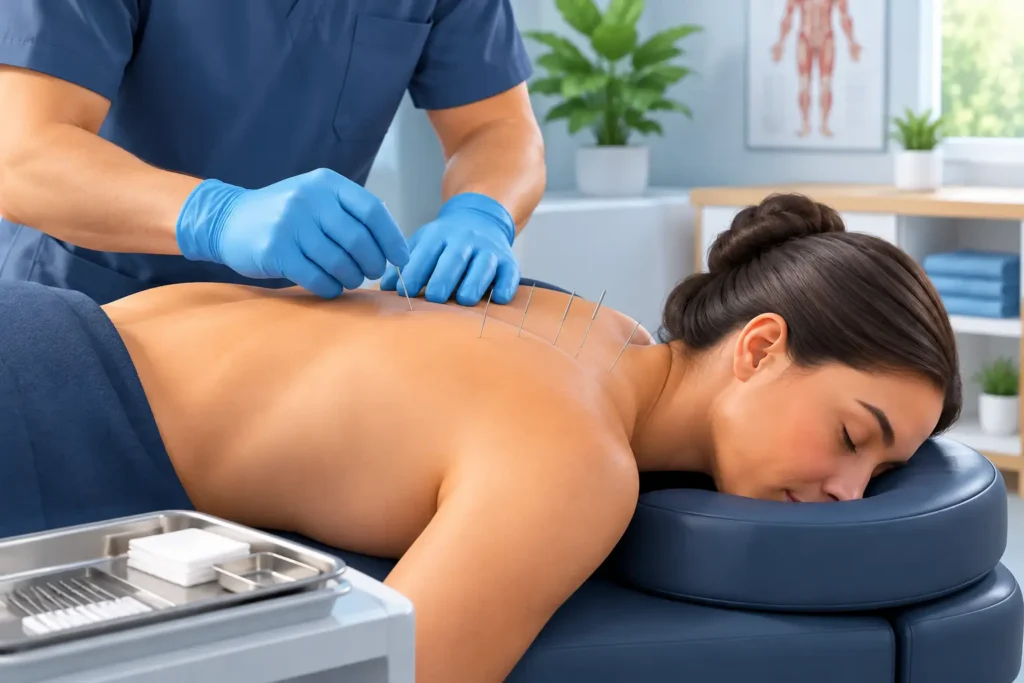
A tight calf that will not release, a shoulder blade that aches through every desk-bound afternoon, or a stubborn hamstring that keeps limiting your run can make any treatment involving needles feel daunting. So, does dry needling hurt? Most patients describe it as an unusual but brief sensation rather than significant pain. The experience varies by muscle, the area being treated and your own sensitivity on the day, but it should always be explained clearly and delivered with your comfort in mind.
Dry needling is used by trained clinicians to address sensitive, irritable points in muscle and surrounding tissue. At FAB Clinic, it forms part of a wider treatment plan, not a one-size-fits-all answer. The aim is to reduce pain, improve movement and help you return to the activities that matter to you.
Does dry needling hurt during treatment?
The needle itself is extremely fine – much thinner than the needles used for injections or blood tests. Many people feel little or nothing as it passes through the skin. When the needle reaches a tight or sensitive part of a muscle, however, you may notice a short-lived ache, cramp, twitch or feeling of pressure.
That twitch response can be surprising. It is an involuntary contraction of the muscle and often lasts no more than a second. Some patients describe it as a quick electric flick, while others feel a dull release or a brief jump in the muscle. It is not usually pleasant, but it should not be overwhelming or continue without your practitioner checking that you are comfortable.
Certain areas can feel more sensitive than others. Muscles around the neck, jaw, hip, calf and shoulder may be tender when already irritated. A muscle that has been overworked after sport, held tense through stress, or compensating for another injury can also react more strongly. This does not necessarily mean anything is wrong. It means the treatment needs to be paced appropriately for you.
What dry needling feels like afterwards
It is common to have mild soreness after dry needling, much like the feeling after a deep massage or an unfamiliar workout. This usually settles within 24 to 48 hours. You may also notice temporary bruising, particularly if you bruise easily or are treating an area with more superficial blood vessels.
For some people, the muscle feels looser and movement is easier almost immediately. For others, the benefit develops gradually over the next few days as the area settles and they begin the recommended rehabilitation exercises. Neither response is automatically better. Recovery depends on the nature of your condition, how long it has been present and whether there are contributing factors such as reduced strength, poor load tolerance or joint stiffness.
A temporary increase in tenderness can happen, especially after treating a highly reactive muscle. Your clinician should explain what to expect and advise you on the right level of activity afterwards. Gentle movement, normal hydration and avoiding an intense training session on the same day are often sensible. Complete rest is rarely necessary unless it has been specifically recommended for your injury.
Why can dry needling feel uncomfortable?
Dry needling is not designed to cause pain. It targets areas of muscle sensitivity often called trigger points, which may be contributing to local discomfort, restricted movement or pain felt elsewhere in the body. Because these tissues are already irritable, stimulating them can create a brief response.
The level of discomfort can depend on several factors. If you are anxious, tired, stressed or expecting a painful experience, your nervous system may be more alert to sensation. If the muscle is very tight or inflamed, it may also be more reactive. Good technique matters too: a qualified practitioner will use clinical judgement, communicate throughout and adjust the approach if a sensation is sharper or more intense than expected.
Dry needling should never be a test of endurance. You are in control and can ask the practitioner to pause, change position or stop at any point. Clear communication is part of safe, effective care.
Is dry needling the same as acupuncture?
Both treatments use fine, single-use sterile needles, but they are based on different assessment and treatment approaches. Dry needling is generally used within musculoskeletal care to target muscle tension, trigger points and movement-related pain. Acupuncture may be used within traditional Chinese medicine principles or modern pain-management approaches.
There can be overlap in how patients experience the needle, but the intention, point selection and wider clinical reasoning may differ. Your practitioner should explain why dry needling is being considered in your specific case and what it is expected to achieve.
How your clinician helps make treatment more comfortable
A thorough assessment comes before the needle. Persistent pain is not always caused by a tight muscle, and treating the wrong structure wastes time. A specialist physiotherapy assessment considers your symptoms, movement, injury history, activity demands and relevant medical factors. Where needed, diagnostic ultrasound can provide fast, accurate insight into tendons, joints and soft tissues.
If dry needling is suitable, the practitioner will talk you through the treatment before beginning. You should know which area is being treated, why it is being targeted, what you might feel and what alternatives are available. Treatment can be adapted by using fewer needles, treating for a shorter time, changing your position or combining dry needling with hands-on therapy and rehabilitation.
This integrated approach matters. A tight gluteal muscle may be related to a back problem, hip weakness or altered walking pattern. A painful calf may be responding to a sudden increase in running load, ankle stiffness or poor recovery. Releasing a muscle without addressing the reason it became overloaded may offer only short-term relief.
When dry needling may not be the right choice
Dry needling can be useful for some presentations, but it is not essential for every painful muscle and it is not appropriate for everyone. Your treatment plan may instead focus on progressive exercise, manual therapy, shockwave therapy, acupuncture, massage, hydrotherapy or another intervention suited to your diagnosis and goals.
Tell your clinician about any medical conditions, medication and previous reactions to needles. This is particularly important if you take blood-thinning medication, have a bleeding disorder, are pregnant, have a compromised immune system, have a needle phobia, or have changes to skin or sensation in the treatment area. There may be circumstances where dry needling is postponed, modified or avoided altogether.
Rare complications can occur with any needling procedure. These include infection, more substantial bruising or, when treating particular areas of the upper body, a very rare risk involving the lung. This is why anatomy knowledge, sterile technique, informed consent and appropriate practitioner training are essential. A reputable clinician will discuss relevant risks without making them sound more likely than they are.
Getting the best result from dry needling
The best outcome is usually not about how many needles are used or how dramatic the twitch response feels. It is about whether treatment helps you move better, tolerate daily activity and progress with rehabilitation. A patient with longstanding shoulder pain may benefit from reducing muscle guarding, but lasting improvement usually also requires restoring shoulder strength and addressing the movements that keep provoking symptoms.
Before your appointment, eat and drink normally unless you have been given different instructions. Wear clothing that gives easy access to the area being assessed, and mention any concerns early. If needles make you anxious, say so. Many patients find that lying down, taking slow breaths and knowing exactly what will happen makes the session far more manageable.
Afterwards, pay attention to your response over the following day or two. Mild soreness is expected; worsening pain, unusual symptoms or concerns about the treated area should be discussed promptly with your clinic. Your feedback helps your practitioner decide whether dry needling remains the right tool and how to shape the next stage of your recovery.
If pain or restricted movement has been holding you back, you do not need to accept a treatment that feels frightening or unclear. The right plan starts with an accurate assessment, a calm explanation and a clinician who is here to keep you moving at a pace that feels right for you.