
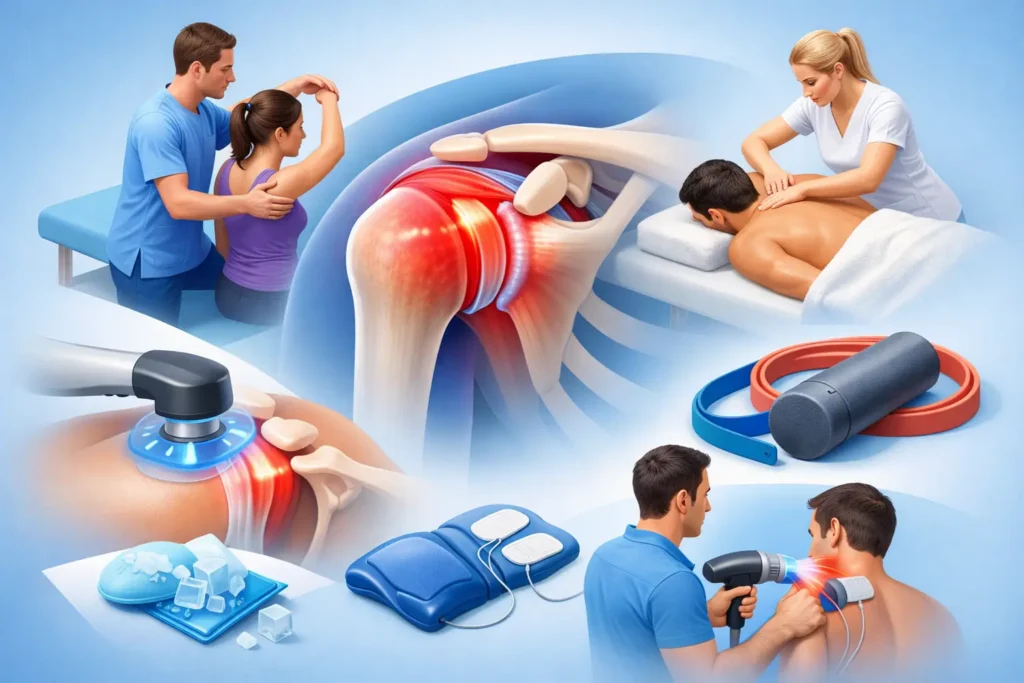
Shoulder pain that catches as you reach into a cupboard, put on a coat or lie on one side can quickly affect sleep, work and exercise. The best therapies for shoulder impingement are not simply those that settle pain for a day or two. They identify why the shoulder has become sensitive, restore confident movement and build the strength needed to prevent the problem returning.
The term shoulder impingement is often used to describe pain at the front or outer side of the shoulder, particularly during lifting or reaching overhead. In many cases, it is better understood as rotator cuff-related shoulder pain. The tendons and bursa around the shoulder may be irritated, but symptoms can also be influenced by stiffness, weakness, training load, posture, neck symptoms and the way the shoulder blade moves.
That is why a one-size-fits-all exercise sheet can fall short. A precise assessment creates a treatment plan that matches your symptoms, goals and the structures involved.
Why an Accurate Diagnosis Comes First
Shoulder impingement-like pain can overlap with several other conditions, including rotator cuff tears, calcific tendinopathy, frozen shoulder, arthritis, instability and pain referred from the neck. Treatment changes depending on the cause. For example, a shoulder that is becoming progressively stiff needs a different approach from a painful but freely moving shoulder after a sudden gym injury.
A specialist musculoskeletal assessment considers when the pain began, what movements aggravate it, whether there was trauma and how it affects your daily life. Your clinician will assess movement, strength, shoulder blade control and the neck where relevant. Diagnostic ultrasound can provide fast, accurate insight into the rotator cuff tendons, bursa and long head of biceps tendon, helping to clarify whether inflammation, tendon change, a tear or calcium deposits are contributing to pain.
Imaging is useful when it answers a clinical question, rather than as a substitute for examination. Many tendon changes are common in people without pain, so results must always be interpreted alongside your symptoms and function.
Best Therapies for Shoulder Impingement: A Combined Approach
For most people, the strongest results come from combining symptom relief with progressive rehabilitation. The right balance depends on pain severity, the duration of symptoms and what you need your shoulder to do, whether that is working at a desk, lifting a child, swimming or returning to tennis.
Targeted physiotherapy and rehabilitation
Exercise-based rehabilitation is central to lasting improvement. The aim is not to force the shoulder through painful ranges, but to restore its capacity gradually. Early treatment may focus on comfortable movement, reducing guarding and improving control around the shoulder blade. As symptoms settle, the programme progresses towards rotator cuff strengthening, endurance work and task-specific loading.
This is more precise than generic band exercises. A builder who needs repeated overhead strength, for instance, will require a different progression from someone whose pain is mainly affecting sleep and reaching behind their back. A physiotherapist can adjust range, resistance, tempo and frequency so the shoulder is challenged enough to adapt without repeatedly flaring it up.
Mild discomfort during rehabilitation can be acceptable, particularly with longstanding tendon pain. Sharp pain, worsening night pain or symptoms that remain significantly aggravated into the next day are signs that the programme needs adjusting.
Hands-on treatment to improve movement
Manual therapy may help when pain, muscle tension or stiffness is limiting movement. This can include joint mobilisation, soft tissue techniques and guided movement work. It is not a standalone cure for shoulder impingement, but it can make it easier to begin exercises, improve comfort and regain useful range of motion.
The value lies in how it is used. Hands-on treatment should support an active rehabilitation plan, not create dependence on repeated appointments without measurable progress. Your treatment plan should always include clear goals, such as sleeping more comfortably, reaching overhead with less pain or returning to training.
Activity modification and load management
Resting completely for weeks often makes a sore shoulder feel stiffer and less capable. Equally, continuing heavy overhead lifting, repetitive DIY or high-volume sport through escalating pain can prolong symptoms. The practical middle ground is temporary load modification.
This may mean reducing the weight or frequency of pressing exercises, taking regular breaks from repetitive reaching or changing sleeping position with support from a pillow. You should keep the shoulder moving within tolerable limits while avoiding the specific activity level that repeatedly provokes it. As strength and confidence improve, the load can be rebuilt in a planned way.
Ultrasound-guided injections when pain blocks progress
If pain is severe, persistent or preventing effective rehabilitation, an ultrasound-guided injection may be considered. Ultrasound guidance allows the clinician to place treatment accurately in the intended area, such as an inflamed bursa or joint, rather than relying on surface landmarks alone.
A corticosteroid injection can offer short-term pain relief for some people, especially where bursitis is prominent. This can create a useful window to restore movement and engage properly with physiotherapy. However, injections do not strengthen a tendon or resolve the movement and loading factors that may have contributed to the problem. Repeated steroid injections are not suitable for everyone and should be weighed carefully, particularly where tendon health is a concern.
Other injection options may be appropriate in selected cases, depending on the diagnosis. The key is a clear clinical rationale and a rehabilitation plan that follows the procedure.
Shockwave therapy for calcific tendon problems
Extracorporeal shockwave therapy can be a useful non-surgical option for certain tendon conditions, particularly calcific tendinopathy. This is where calcium deposits develop within a rotator cuff tendon and can cause intense pain and marked restriction. It is not routinely the first treatment for every shoulder labelled as impingement.
When assessment and imaging show that it is appropriate, shockwave therapy may help reduce pain and support the body’s response to the affected tendon. Treatment is normally delivered as a course and works best alongside a progressive rehabilitation programme. Your clinician should explain the expected benefits, likely discomfort during treatment and whether alternatives may be more suitable.
What About Acupuncture, Dry Needling and Massage?
These treatments can have a place when pain and protective muscle tension are making movement difficult. Acupuncture or dry needling may provide short-term symptom relief for some patients, while massage can reduce tightness around the neck, upper back and shoulder. They are best viewed as supportive therapies, not replacements for diagnosis, progressive loading and movement retraining.
For someone whose shoulder has become painful after months of desk work and reduced activity, easing upper back and neck tension may make rehabilitation more comfortable. For a competitive athlete with significant rotator cuff weakness, strength and sport-specific control will remain the priority.
When Shoulder Pain Needs Urgent Assessment
Seek prompt medical assessment after a significant fall, collision or sudden lifting injury if you cannot raise the arm, have obvious deformity, severe swelling or rapidly increasing weakness. New numbness, tingling that persists down the arm, fever, unexplained weight loss, chest pain or shoulder pain accompanied by breathlessness also require urgent medical advice.
Persistent night pain, major loss of movement or symptoms that have not improved after a sensible period of rehabilitation deserve a specialist review. These signs do not automatically mean there is serious damage, but they do mean the diagnosis and treatment plan should be checked.
Building a Recovery Plan That Lasts
Recovery times vary. A recent, mild flare may improve over several weeks with appropriate load changes and rehabilitation. Longstanding tendon pain, a calcific deposit or significant stiffness can take longer and may need more than one treatment pathway. The most effective plan is one that is reviewed as your shoulder changes, rather than fixed at the first appointment.
At FAB Clinic, integrated assessment can bring physiotherapy, diagnostic ultrasound and interventional pain options into one clear recovery plan when needed. The goal is not just to get you through the next painful reach. It is to help you return to work, sport and everyday movement with a shoulder you can trust again.