
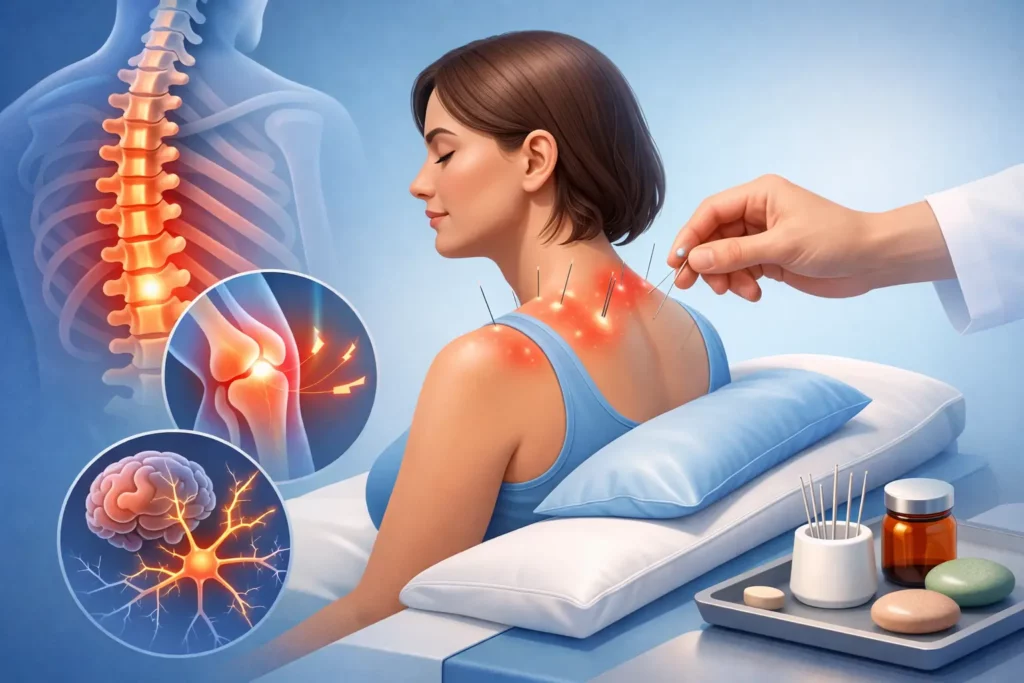
When pain has been dragging on for months, people rarely want another vague promise. They want to know whether acupuncture for chronic pain can actually make day-to-day life easier – getting through work, sleeping better, walking further, or simply turning their head without bracing for it.
That is the right question to ask. Acupuncture is not a magic fix, and it is not the best starting point for every patient. But for many people living with persistent musculoskeletal pain, it can be a useful part of a broader treatment plan, especially when pain is affecting movement, sleep, exercise tolerance and confidence in the body.
How acupuncture for chronic pain is thought to work
Acupuncture involves placing very fine needles into specific points in the body. In a clinical setting, the aim is not simply to chase symptoms but to influence how the nervous system processes pain, reduce muscle tension and support more comfortable movement.
Current research suggests several possible effects. Needling may stimulate the release of the body’s own pain-modulating chemicals, influence local blood flow and reduce sensitivity within irritated tissues. It can also help calm an overactive pain response, which matters in chronic pain because symptoms are not always driven by tissue damage alone. Quite often, the nervous system itself becomes more reactive over time.
This is one reason acupuncture may help some patients even when scans do not show a dramatic structural problem. Pain is real whether it starts with inflammation, overload, joint irritation, tendon pain or a sensitised nervous system. Good treatment needs to reflect that complexity.
What conditions may respond well
Acupuncture is commonly used for persistent back pain, neck pain, shoulder pain, osteoarthritis-related joint pain, tension-related headaches and some forms of tendon or muscle pain. It can also be helpful where pain and muscle guarding are feeding into one another, such as after an injury that has technically healed but still feels stiff, sore or unreliable.
That said, response varies. Someone with long-standing lower back pain linked to stiffness, deconditioning and heightened pain sensitivity may do very well. Someone with severe nerve compression, progressive weakness or major joint degeneration may need a different intervention or a more integrated plan. This is where proper assessment matters.
For patients with chronic pain, the real value of acupuncture is often that it creates a window of opportunity. If pain eases enough to move better, sleep better and tolerate rehabilitation, recovery can start to gain momentum.
What the evidence really says
The evidence base for acupuncture is mixed but meaningful. It is not a cure-all, yet it has shown benefit for some chronic pain conditions, particularly back pain, neck pain, knee osteoarthritis and headache disorders. In many cases, the improvement is moderate rather than dramatic, but moderate relief can still be clinically significant when pain has been persistent and function has dropped.
The key point is context. Research in chronic pain is rarely tidy because patients are different, symptoms overlap and treatment outcomes depend on more than one factor. The quality of diagnosis, the skill of the practitioner and whether acupuncture is paired with exercise, manual therapy or load management all influence results.
This is why a specialist clinic will not present acupuncture as a standalone answer to every problem. If the diagnosis is unclear, imaging-led assessment may be needed first. If pain is coming from a joint, tendon or irritated bursa, the best treatment plan may involve rehabilitation, hands-on therapy, activity modification or injection therapy alongside needling. Evidence-based care means matching the treatment to the problem, not forcing every patient down the same route.
What a course of treatment usually looks like
Most patients do not know after a single session whether acupuncture is the right fit. Some feel easier straight away. Others notice change after two or three appointments, particularly if the problem is long-standing and movement patterns have adapted around pain.
A typical course may involve several sessions over a few weeks, with progress judged against clear goals. Those goals should be practical: less morning stiffness, fewer pain flare-ups, walking without limping, sitting through a meeting, returning to training, or sleeping through the night. A treatment that does not improve function is rarely enough on its own.
During the appointment, the needles used are extremely fine. Many people feel very little going in. Others notice a brief ache, warmth, tingling or a heavy sensation around the area. These responses are common and usually settle quickly. Sessions are generally well tolerated, and many patients find them surprisingly relaxing.
Who acupuncture may suit – and who needs another route
Acupuncture may suit adults with persistent musculoskeletal pain who want to reduce symptoms without relying solely on medication, or who need support to progress with rehabilitation. It can be especially useful where pain is accompanied by muscular tension, movement fear or recurring flare-ups that have stalled recovery.
It may be less suitable as the main treatment where there are red-flag symptoms, significant neurological changes, suspected fracture, infection, inflammatory disease requiring medical management, or pain that clearly demands a more interventional approach. In those situations, speed and diagnostic accuracy matter more than trying several low-intensity treatments in the hope that one lands.
That is why the best clinics start with a proper assessment rather than a menu of therapies. Chronic pain is a broad term. A painful shoulder could reflect rotator cuff irritation, frozen shoulder, bursitis, referred neck pain or arthritis. A painful heel could be plantar fasciitis, nerve irritation or an overload issue higher up the chain. The treatment only works well when the diagnosis is right.
Acupuncture works best as part of a wider plan
For many patients, the strongest results come when acupuncture sits inside an integrated musculoskeletal care model. Pain relief matters, but so does restoring strength, mobility and trust in the affected area.
If needling settles pain but no one addresses weak glutes in back pain, poor scapular control in shoulder pain, calf loading in Achilles symptoms or pacing in flare-prone arthritis, the benefit may be short-lived. On the other hand, if acupuncture reduces pain enough for a patient to move more normally and engage with rehab, it can become a very practical tool.
This is particularly relevant for busy adults who cannot afford drawn-out uncertainty. Working professionals, active patients and older adults alike often want fast, accurate insight into why they hurt and what will change it. At FAB Clinic, that means using specialist assessment, evidence-based treatment planning and, where needed, additional options such as physiotherapy, rehabilitation, diagnostic ultrasound or image-guided interventions to build the right pathway.
Are there risks or side effects?
Acupuncture is generally considered safe when performed by a properly trained clinician using sterile technique. The most common side effects are minor bruising, slight bleeding at the needle site, temporary soreness or short-lived tiredness afterwards.
Even so, safe does not mean casual. Medical history matters. Patients should tell their clinician about blood-thinning medication, pregnancy, bleeding disorders, pacemakers if electro-acupuncture is being considered, and any history of fainting with needles. A clinician should also know when not to needle, or when another treatment is more appropriate.
How to decide whether to try it
A sensible decision starts with three questions. First, has the source of the pain actually been assessed properly? Second, is acupuncture being offered as part of a defined recovery plan rather than as a vague add-on? Third, will progress be measured against function, not just temporary symptom change?
If the answer to those questions is yes, acupuncture may be a worthwhile option. It can help reduce pain, relax protective muscle tension and make rehabilitation more manageable. But the aim should always be bigger than a short spell of relief. The aim is better movement, better tolerance for daily activity and a clearer route back to normal life.
For people living with persistent pain, that combination of symptom relief and forward momentum is often what matters most. Not every treatment needs to do everything. Sometimes the right intervention is the one that helps the rest of the recovery plan start working.