
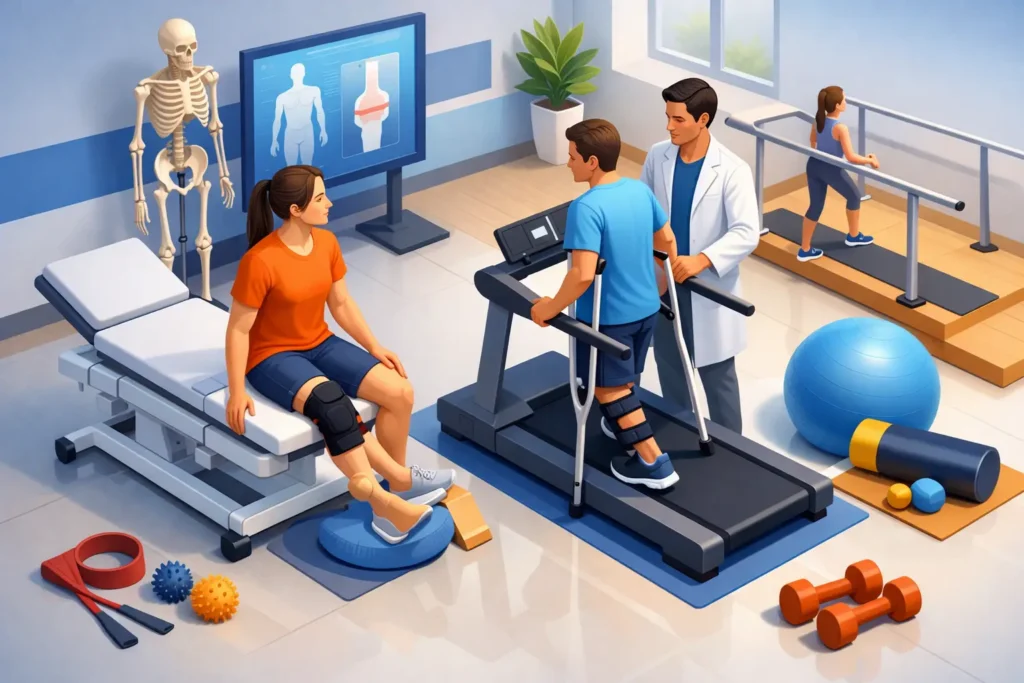
The first few days after an injury can be misleading. Pain may settle quickly while weakness, stiffness or poor movement control remains – and that is often where repeat injuries begin. This guide to rehabilitation after injury explains how a structured, specialist-led plan can help you return to daily life, work or sport with confidence rather than simply waiting for symptoms to fade.
Rehabilitation is not a race to get back to your previous routine. It is a process of understanding what has been injured, reducing the factors that are prolonging recovery and progressively rebuilding the capacity your body needs. Whether you have twisted an ankle, strained a hamstring, developed shoulder pain at the gym or are recovering from surgery, the right plan should be specific to you.
Why rehabilitation after injury needs more than rest
Rest can be useful in the early stage of an acute injury, particularly when pain and swelling are significant. However, too much rest for too long can lead to stiffness, muscle loss and reduced confidence in movement. The aim is usually not complete inactivity, but carefully chosen activity at the right dose.
A painful knee, for example, may need temporary changes to running, squatting or stairs. That does not automatically mean avoiding all exercise. Maintaining comfortable movement and strengthening the surrounding muscles can support recovery while helping you stay active. The precise approach depends on the diagnosis, the severity of the injury, your health history and the demands you want to return to.
This is why an accurate assessment matters. Similar symptoms can have very different causes. Heel pain may involve the plantar fascia, Achilles tendon, a nerve or a stress-related bone injury. Shoulder pain may be driven by the rotator cuff, joint irritation, neck referral or a loss of movement control. Treating the symptom without understanding the source can delay a positive outcome.
A guide to rehabilitation after injury: the key stages
Although no two recoveries are identical, effective rehabilitation generally follows a progression. You should move forward according to your symptoms, function and clinical findings, rather than a fixed calendar date.
1. Establish the diagnosis and recovery priorities
The first appointment should identify what has happened, what movements are limited and what may be preventing healing. A specialist musculoskeletal assessment considers your injury mechanism, pain pattern, strength, range of movement, work demands, sport and previous injuries.
Where the diagnosis is unclear or a more detailed view is required, diagnostic ultrasound can provide fast, accurate insight into many soft-tissue and joint conditions. It can help assess structures such as tendons, muscles, ligaments and bursae, while also guiding decisions about the most appropriate treatment plan. Imaging is valuable when it changes management, but it is not a replacement for a thorough clinical assessment.
At this stage, your clinician should also set meaningful goals. Getting back to walking the dog without pain, lifting a child comfortably, working at a desk or returning to five-a-side football are all valid goals. They guide the type and level of rehabilitation required.
2. Settle pain and protect the injured area
Early rehabilitation focuses on reducing unnecessary irritation while keeping you safely mobile. This may involve modifying activities, improving walking mechanics, using a support temporarily or introducing gentle mobility work. Hands-on physiotherapy, osteopathy, acupuncture, dry needling or soft-tissue treatment may be appropriate for some people, particularly where pain and muscle guarding are restricting movement.
These treatments should support active rehabilitation, not replace it. Passive treatment can offer welcome pain relief, but long-term progress usually comes from gradually restoring how the body moves, loads and responds to everyday demands.
In selected cases, specialist treatment such as extracorporeal shockwave therapy or an ultrasound-guided injection may be considered. These options can be useful for particular tendon, joint and inflammatory conditions, especially when symptoms persist despite an appropriate period of conservative care. They are not a shortcut for every injury. The decision should be based on a clear diagnosis, expected benefit and a rehabilitation plan that continues afterwards.
3. Restore movement before forcing performance
As symptoms become more manageable, rehabilitation shifts towards restoring range of movement and normal movement patterns. This may include controlled joint mobility, muscle activation and balance exercises. The right exercises are often simple at first, but their precision matters.
For a recovering ankle sprain, that could mean regaining comfortable ankle movement, rebuilding calf strength and retraining balance before returning to uneven ground or court sport. For lower back pain, it may mean improving tolerance to bending, lifting and sitting rather than chasing a perfectly pain-free scan or posture.
Some discomfort during rehabilitation can be normal. Muscles that have been underused may ache after exercise, and an injured area may feel mildly uncomfortable as load increases. Sharp pain, marked swelling, worsening night pain or symptoms that remain significantly elevated after activity deserve review. Your clinician can help you distinguish productive loading from a setback.
4. Build strength, capacity and confidence
Once basic movement is improving, the body needs enough capacity for real life. Strengthening should be progressive and relevant. A runner needs more than the ability to walk without pain; they need the ability to absorb repeated impact. Someone returning to manual work needs lifting, carrying and twisting tolerance. An older adult recovering from a fall may need leg strength, balance and confidence on stairs.
This is where rehabilitation becomes highly individual. Exercise choice, resistance, repetitions and frequency should match your starting point and goals. Too little load may fail to create change. Too much, too soon can flare symptoms and interrupt consistency. A good programme is challenging but achievable, with clear markers for progression.
Pilates-based rehabilitation, hydrotherapy and supervised gym work can all have a role when they suit the person and injury. Hydrotherapy can be particularly helpful when land-based loading is painful, while targeted Pilates may improve control, mobility and strength for some spinal and lower-limb conditions. The method matters less than whether it is clinically appropriate and progresses you towards your goal.
5. Rehearse your return to normal activity
The final stage is often missed. Feeling better in the clinic is not the same as being ready for a full day at work, a long walk, a tennis match or a return to heavy lifting. Rehabilitation should include a gradual return to the tasks that matter to you.
This may involve practising changes of direction after a knee injury, building running distance in measured stages, or testing lifting technique and endurance before returning to a physical job. Sport-specific drills and work-specific tasks help reveal gaps that basic exercises may not expose.
Confidence deserves attention too. After an injury, many people protect the painful area long after it is capable of doing more. This is understandable, especially after repeated pain or a frightening incident. Clear education, measured exposure to movement and, where needed, cognitive behavioural therapy can help reduce fear and rebuild trust in your body.
When should you seek specialist help?
Early assessment is sensible if pain is severe, movement is significantly restricted, you cannot bear weight, symptoms are worsening or recovery has stalled. You should seek urgent medical advice for deformity after trauma, loss of bladder or bowel control, numbness around the saddle area, a hot swollen joint with fever, or sudden calf swelling and breathlessness.
Specialist support is also valuable when an injury keeps returning. Recurrence often indicates that pain has improved without the underlying strength, mobility, technique or loading issue being addressed. A clinician can look beyond the injured site and assess the wider movement pattern, training load and lifestyle factors contributing to the problem.
Make your rehabilitation plan work in real life
The best programme is the one you can follow consistently. Tell your clinician if you travel frequently, work long hours, care for family or have limited access to equipment. A short, targeted plan performed regularly is usually more effective than an ambitious programme that does not fit your week.
Keep track of function rather than focusing only on pain. Notice whether you can walk further, sleep more comfortably, use stairs with greater control or complete more of your normal training. These changes often show progress before symptoms have disappeared completely.
At FAB Clinic, integrated musculoskeletal care brings assessment, rehabilitation and advanced treatment options together when they are clinically indicated. The goal is not simply to calm an injury for a few days, but to give you a clear, evidence-based route back to the activities that keep your life moving.