
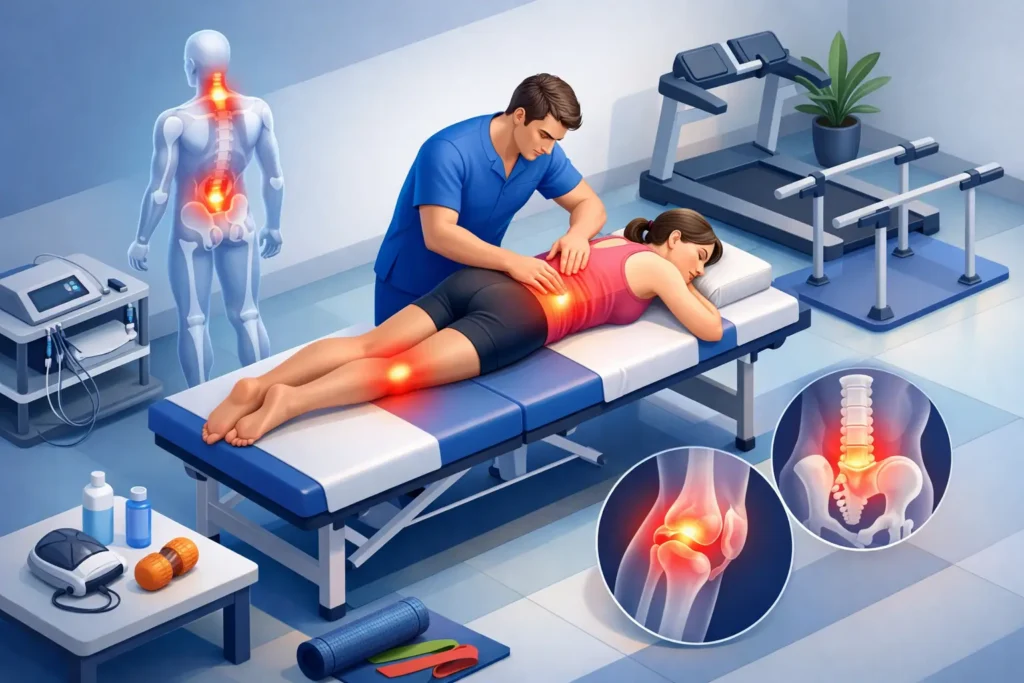
Chronic pain can change far more than your comfort. It can affect how you work, sleep, exercise, travel and trust your own body. Understanding how physiotherapy treats chronic pain starts with recognising that persistent symptoms rarely have one simple cause – and that effective care needs to address both the painful area and the way pain is affecting movement, strength and confidence.
At FAB Clinic, treatment is built around a clear diagnosis, practical pain relief and a progressive plan to help you return to the activities that matter to you. Whether pain has been present for months or years, the aim is not simply to offer temporary relief. It is to identify what is maintaining the problem and create the best treatment plan for lasting improvement.
How physiotherapy treats chronic pain
Physiotherapy for chronic pain is an active, individualised process. It may include hands-on treatment, carefully progressed exercise, education, rehabilitation and, where appropriate, access to advanced diagnostic or pain-management options. The right combination depends on the source of your symptoms, your health history, your goals and how pain currently limits your daily life.
Chronic pain is often described as pain lasting longer than three months. It can follow an injury that has not settled as expected, develop gradually through repetitive strain, or occur alongside conditions such as osteoarthritis, tendon problems, spinal pain or persistent shoulder pain. Sometimes scans show a clear structural issue; sometimes they do not explain the full severity of symptoms. Both situations deserve thorough assessment and a thoughtful response.
It begins with a detailed assessment
A good physiotherapy assessment goes beyond asking where it hurts. Your clinician will consider when the pain began, what makes it worse or better, previous injuries, work demands, sport, sleep, stress, medication and your wider health. They will assess movement, joint range, muscle strength, balance, posture and the specific tasks that trigger symptoms.
This helps distinguish between, for example, a stiff and irritable shoulder, a tendon that is struggling with load, pain referred from the spine, or a joint affected by inflammation. For people who have already tried basic treatment without success, fast, accurate insight can be particularly valuable. Diagnostic ultrasound may be appropriate for certain musculoskeletal problems, helping to guide the next stage of care with greater precision.
Assessment also includes screening for signs that require medical investigation rather than routine physiotherapy. New weakness, unexplained weight loss, fever, changes in bladder or bowel control, or pain following significant trauma should always be assessed urgently. Safe care means knowing when physiotherapy is the answer and when a different medical pathway is needed.
Reducing pain without creating dependence on treatment
Hands-on therapy can be useful when pain, stiffness or muscle guarding is making movement difficult. Techniques may include joint mobilisation, soft-tissue work, massage or targeted stretching. These approaches can reduce symptoms in the short term and make it easier to begin moving more normally.
However, passive treatment alone is rarely the complete answer for chronic pain. If relief only lasts until the next appointment, the plan needs to develop. Physiotherapy uses symptom relief as a window of opportunity: a chance to restore movement, build capacity and reduce the fear that activity will always cause harm.
Some people benefit from additional treatments based on their diagnosis. Acupuncture or dry needling may help ease muscular pain for selected patients. Extracorporeal shockwave therapy can be considered for some persistent tendon conditions, such as plantar fasciitis or certain forms of tendinopathy. When joint inflammation or a clearly identified pain generator is limiting rehabilitation, an ultrasound-guided injection may also be discussed as part of a wider programme.
These options are not shortcuts, and they are not right for everyone. An injection may reduce pain enough to allow effective rehabilitation, but it will not replace the strength, mobility and load-management work needed to support a lasting result. The most appropriate intervention is the one that matches the diagnosis and supports your longer-term recovery.
Rebuilding strength, movement and tolerance
Exercise is one of the central ways physiotherapy treats chronic pain, but it should never mean being told simply to push through severe symptoms. The programme should start at a level you can manage and progress according to your response.
For a person with longstanding lower back pain, that may begin with controlled spinal movement, hip and trunk strength, and a gradual return to walking or gym activity. For knee osteoarthritis, it may focus on improving leg strength, balance and confidence with stairs. For a painful shoulder, the priority may be restoring range of movement before increasing the load placed through the rotator cuff.
The key is dosage. Too little activity can lead to deconditioning and greater sensitivity; too much too soon can trigger a flare-up. Your physiotherapist helps you find the productive middle ground, adjusting repetitions, resistance, pace and recovery time as your capacity improves.
A flare-up does not automatically mean you have caused damage or gone backwards. Pain can vary with poor sleep, stress, an increase in activity, illness or a sudden change in routine. Understanding these patterns helps you respond calmly and make sensible adjustments rather than stopping all movement. That confidence is often a major part of recovery.
Pain education changes the rehabilitation process
Persistent pain involves the nervous system as well as muscles, joints and tendons. When pain has continued for a long time, the body can become more protective. Normal movement may feel threatening, and muscles may tense before an activity even begins.
This does not mean the pain is imagined. It means pain is real, complex and influenced by more than tissue damage alone. Clear education can remove some of the fear around symptoms. When you understand why pain may fluctuate, how to pace activity and which sensations are safe to work through, it becomes easier to participate in rehabilitation.
For some patients, pain has also led to anxiety, low mood, poor sleep or avoidance of work and social activities. Cognitive behavioural therapy can be a helpful addition where these factors are contributing to the pain cycle. Combining physical rehabilitation with psychological support is not about dismissing symptoms; it is about treating the full impact of chronic pain.
A plan built around real life
The best physiotherapy plan fits the life you actually lead. A working professional may need strategies for a long commute, desk set-up and return to exercise around a busy schedule. An older adult may be focused on walking safely, getting out of a chair comfortably and maintaining independence. A runner with Achilles pain will need a different progression from someone managing neck pain after years at a computer.
Your plan may include home exercises, supervised rehabilitation, Pilates, hydrotherapy or guidance on returning to sport. Home visits can also be valuable when mobility, travel or caring responsibilities make clinic appointments difficult. Progress is measured by more than a pain score: sleeping better, walking further, lifting with less concern, returning to training or playing with grandchildren are meaningful outcomes too.
There is no fixed timetable for chronic pain recovery. Some people notice change within a few sessions, particularly when a clear mechanical issue responds well to treatment. Others need a longer, steadier programme, especially where pain has been present for years or several areas of the body are involved. Honest expectations and regular review are essential.
When more specialist input can help
If symptoms persist despite a well-followed rehabilitation plan, it may be time to reassess rather than repeat the same treatment. This is where an integrated musculoskeletal service can make a difference. Access to specialist physiotherapy, osteopathy, diagnostic ultrasound, interventional treatments and rehabilitation under one roof can reduce delays and ensure each stage of care informs the next.
The goal is not to chase every finding on a scan or offer treatment for its own sake. It is to identify the factors most likely to improve your pain and function, then act decisively. A precise diagnosis, appropriate pain relief and a structured return to activity give you the strongest platform for recovery.
Chronic pain may have narrowed your routine over time, but it does not have to define what you can do next. With the right assessment and a plan that progresses at your pace, every achievable movement can become evidence that your body is capable of more.