
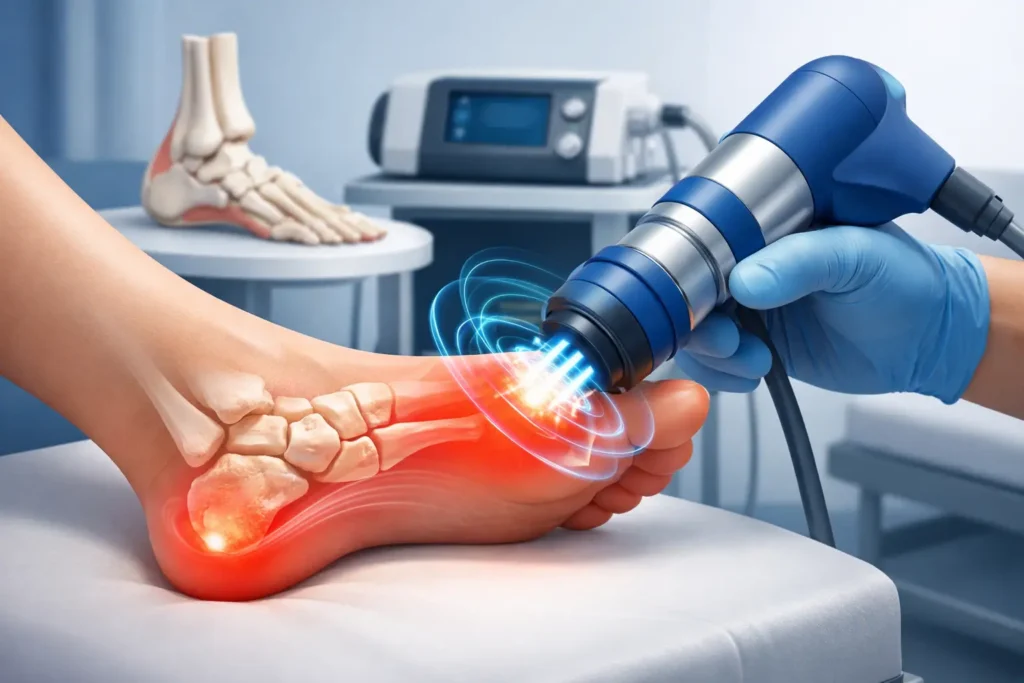
The first few steps after getting out of bed can be the worst part of heel pain. You may loosen up as you walk, only for the ache to return after a commute, a long shift on your feet or exercise. If rest, stretching and changing shoes have not shifted the problem, it is reasonable to ask: can shockwave therapy help heel pain?
For the right diagnosis, extracorporeal shockwave therapy, often shortened to ESWT, can be an effective non-surgical treatment option. It is most commonly used for persistent plantar fasciopathy, often called plantar fasciitis, when symptoms have not improved sufficiently with a well-managed rehabilitation programme. It is not an instant fix or a substitute for finding out what is driving the pain, but it can help reduce symptoms and support recovery.
Can shockwave therapy help heel pain caused by plantar fasciitis?
In many cases, yes. Shockwave therapy is supported by clinical evidence for chronic plantar fasciopathy, particularly when heel pain has been present for several months and has not settled with initial conservative care. The treatment delivers controlled acoustic waves through the skin into the painful tissue. These waves are thought to stimulate local biological processes involved in tissue repair, while also changing how pain signals are processed.
Plantar fasciopathy affects the thick band of tissue running from the heel towards the toes. Although it is often described as inflammation, longer-standing cases are more commonly linked with changes in the quality and load tolerance of the tissue rather than simple inflammation. That distinction matters. Repeatedly resting the foot may calm symptoms temporarily, but it does not always build the capacity needed for walking, running or standing without pain.
Shockwave therapy aims to support that process. It is usually combined with a programme that addresses calf strength, foot control, mobility, footwear and the amount of load placed through the heel. The strongest outcomes tend to come from this combined approach, rather than treating shockwave as a stand-alone answer.
Heel pain is not always plantar fasciopathy
Pain beneath the heel is common, but the source is not always the plantar fascia. A precise assessment is the starting point for the best treatment plan. Treating the wrong structure can delay recovery, even when the treatment itself is appropriate for another condition.
A clinician will consider where the pain is located, when it occurs and what has changed in your activity, work or footwear. Classic plantar fasciopathy often causes sharp pain at the inner underside of the heel, especially with first steps in the morning or after sitting. Symptoms may ease as the foot warms up, then build again after prolonged standing or walking.
Other causes can include irritation of a nerve, fat pad syndrome, a stress injury, Achilles tendon problems, arthritis or referred pain from the back. A heel spur may appear on an X-ray, but it is not automatically the cause of pain. Many people have heel spurs without symptoms, while others have significant plantar fascia pain without one.
At FAB Clinic, specialist musculoskeletal assessment and diagnostic ultrasound can provide fast, accurate insight where the diagnosis is unclear. Ultrasound may help identify thickening or changes in the plantar fascia and assess nearby structures, allowing treatment to be directed at the problem that is actually limiting you.
What does shockwave treatment involve?
ESWT is delivered in clinic without injections or surgery. A clinician applies gel to the heel and positions the shockwave handpiece over the affected area. The treatment itself usually takes only a few minutes.
You will feel repeated tapping or pulsing sensations. It can be uncomfortable, particularly over a sensitive heel, but the intensity can be adjusted to a level you can tolerate. Your practitioner should explain what to expect throughout and use your response to guide the dose of treatment.
A course commonly involves three sessions, often spaced around a week apart, although recommendations vary according to your symptoms, response and the type of device used. Some people notice improvement during the treatment course; for others, progress is more gradual over the following weeks. The goal is meaningful improvement in pain and walking tolerance, not simply a short-lived reduction in discomfort on the day.
It is sensible to avoid high-impact activity immediately after treatment if it aggravates the area. However, complete rest is rarely the objective. Your clinician will advise on the right level of activity and a rehabilitation plan that keeps you moving without repeatedly overloading the heel.
Focused and radial shockwave therapy
You may hear the terms focused and radial shockwave therapy. Both are used in clinical practice, but they deliver energy differently and are not interchangeable. The most appropriate choice depends on the condition, the tissue being treated and the clinical assessment.
Rather than choosing treatment based on a device name alone, look for a provider who can explain why shockwave is being recommended in your case, what else needs to change, and how progress will be measured.
Who is most likely to benefit?
Shockwave therapy is often considered for people with heel pain that has persisted despite a period of appropriate self-management or physiotherapy. This may include someone who has adjusted training, tried supportive footwear, completed stretching and strengthening work, yet still cannot comfortably manage daily walking or return to sport.
It may be particularly useful when first-step pain remains prominent, the plantar fascia is tender at its attachment to the heel, and the clinical picture is consistent with chronic plantar fasciopathy. Your age, fitness level and whether you run, play sport or spend long hours on your feet do not rule it in or out. The key question is whether the diagnosis and treatment goals fit.
It may be less suitable if there is an untreated stress fracture, active infection, significant loss of sensation, a suspected tumour or another cause of heel pain requiring different care. Pregnancy, bleeding disorders and the use of certain anticoagulant medicines may also affect whether treatment is appropriate. A proper medical history and examination are essential before proceeding.
Why rehabilitation still matters after shockwave therapy
Heel pain often develops when the demands placed on the foot exceed what the tissues can currently tolerate. That can happen after a sudden increase in running, a change in job, reduced activity followed by a busy holiday, weight changes, worn footwear or limited ankle movement. Sometimes there is no single trigger.
Shockwave therapy can help settle a stubborn pain cycle, but long-term improvement usually depends on rebuilding capacity. Your rehabilitation may include progressive calf raises, exercises for the small muscles of the foot, balance work and gradual exposure to walking, running or sport. The exact programme should be based on what you need to get back to – whether that is standing through a workday, walking the dog, completing a parkrun or playing with grandchildren.
Footwear can also make a practical difference. A supportive shoe with adequate cushioning may reduce aggravation during a painful phase, while overly flat, worn or unsupportive footwear can make symptoms harder to manage. Orthotics can be helpful for some people, but they are not compulsory for everyone and should not replace strength and load management.
Are there side effects or risks?
Shockwave therapy is generally well tolerated, but it is not entirely sensation-free. Temporary soreness, redness, mild swelling or bruising can occur around the treatment area. These effects usually settle quickly. Some people experience a brief increase in symptoms before improvement begins.
A clinician should discuss expected benefits, limitations and alternatives before treatment. If pain is severe, night pain is unexplained, the heel is hot and swollen, or you cannot put weight through the foot, seek assessment promptly rather than assuming it is plantar fasciitis.
Setting realistic expectations for recovery
Persistent heel pain can be frustrating because it affects ordinary moments as much as sport: getting downstairs, rushing for a train or standing to cook dinner. Recovery is rarely about one treatment session. It is about using the right intervention at the right point, then steadily restoring confidence in the foot.
If your heel pain has become a daily limitation, a specialist assessment can clarify whether shockwave therapy is likely to help and build a plan around the activities that matter to you. The aim is not merely to make the first steps easier, but to help you move through the rest of the day with greater comfort and control.